| Longevity Daily |
Fri · Jun 12 |
|
|
Three things we learned this week. One worth doing before Monday.
Grip, single-leg balance, sit-to-rise. The three of those we covered. The fourth test on the same shortlist, the one with the strongest mortality data of any of them, was on us. Here it is, plus two other things from the week.
|
|
|
|
|
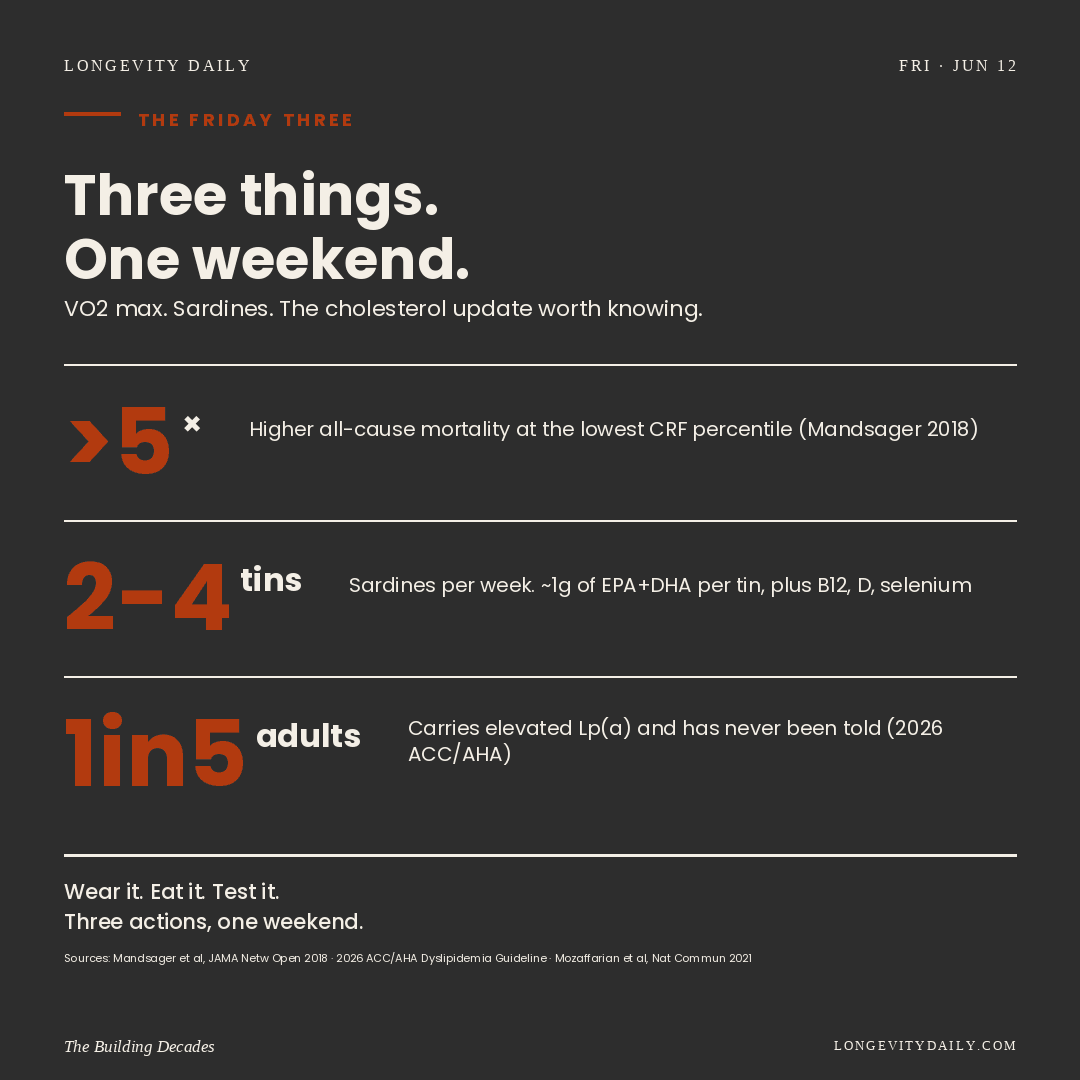
Save this. Three actions for the weekend. Wear it. Eat it. Test it.
|
1. VO2 max.
|
|
Cardiorespiratory fitness. The maximum oxygen your body uses under load. The strongest single mortality predictor in the published literature.
We have been holding back on this one, not to overwhelm you while the other three tests were running. Mandsager et al, JAMA Network Open 2018, n=122,007 Cleveland Clinic adults completing graded treadmill testing. The lowest fitness percentile carried more than five times the all-cause mortality of the highest. No observed upper limit of benefit. The relationship outpredicted smoking, hypertension, and type 2 diabetes in the same cohort.
Test it this weekend with your wearable. The number is an estimate. The percentile band you sit in is reliable enough. Below the 25th for your age band is the alarm. Above the 75th is where the Mandsager curve flattens.
If you do not have a wearable yet, three picks by budget:
Under $100: Amazfit Bip 5. Reliable VO2 max from steady-state walks. No subscription.
$100 to $300: Apple Watch SE. Broadest user base. Accurate from outdoor activity.
$300+: Garmin Forerunner 265. Strongest VO2 max methodology in the tier. No subscription.
|
2. Sardines.
|
|
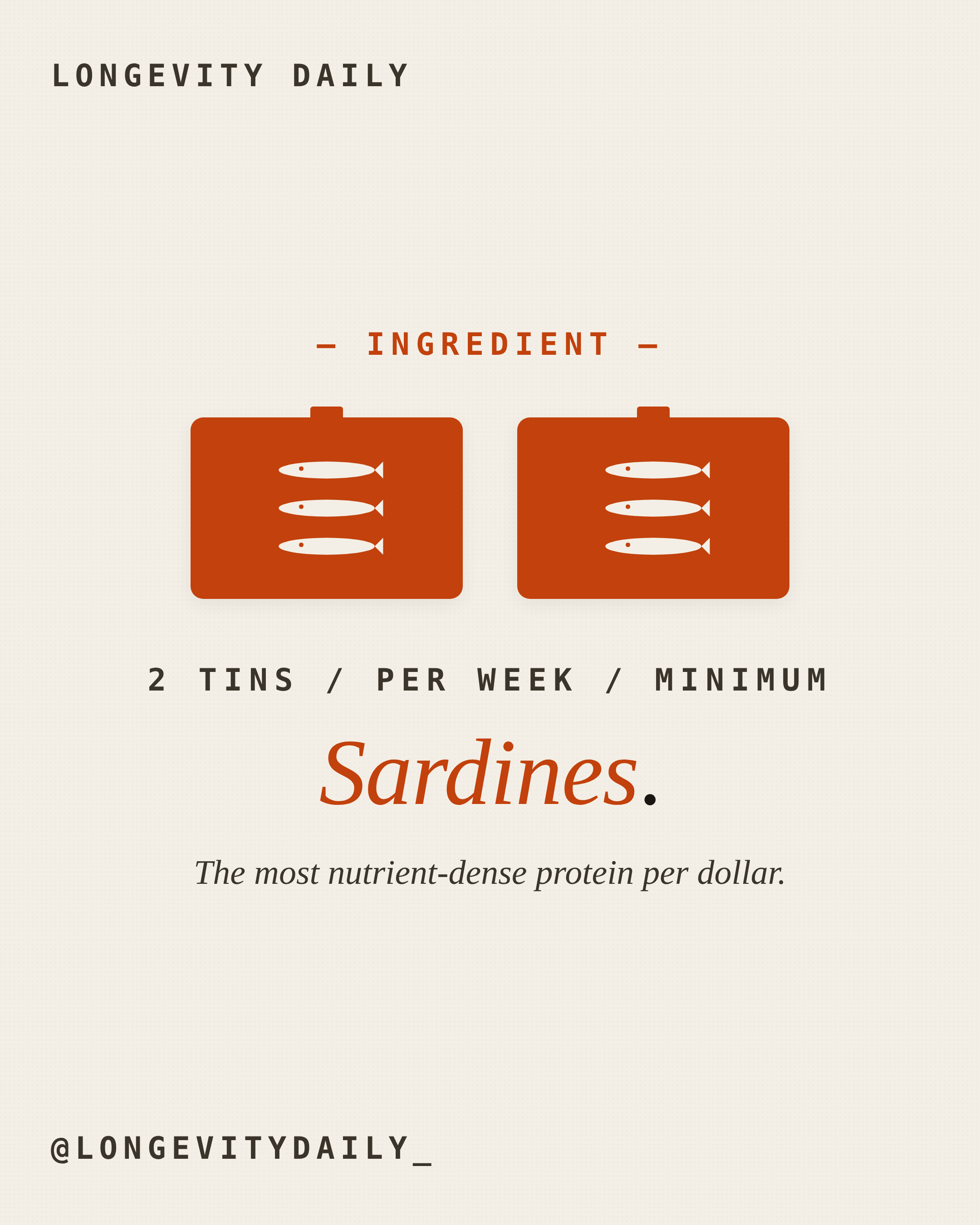
Two to four tins a week.
Two Fridays ago we said the omega-3 mortality benefit is downstream of fatty fish, not capsules. Sardines are the cheapest version. One small tin gets you roughly a gram of EPA+DHA, plus B12, vitamin D, calcium from the soft bones, and selenium. Shelf-stable for years. Two dollars.
|
|
|
Anchor the three on your Healthspan Score →
|
3. Cholesterol just got better.
|
|
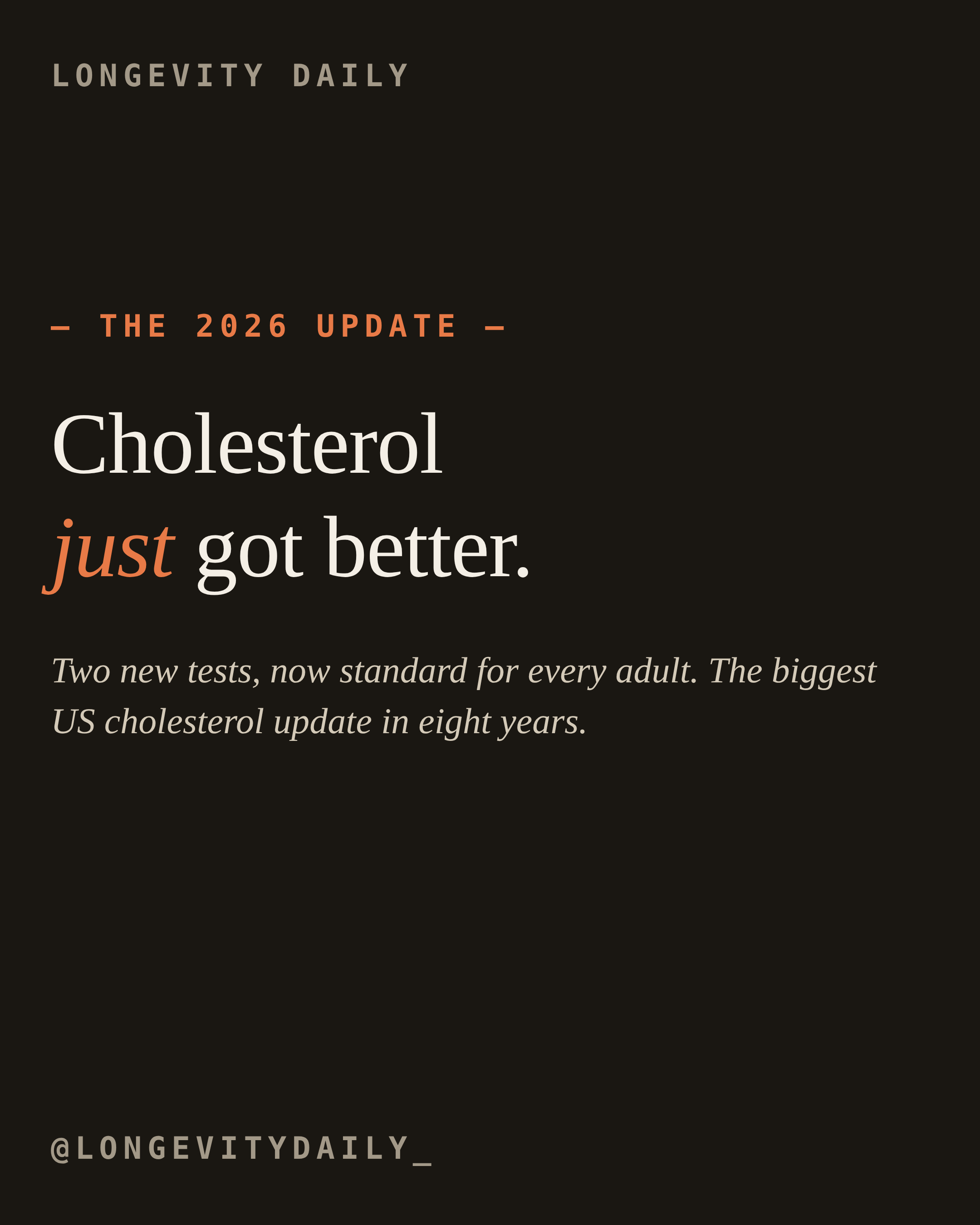
The first major US cholesterol update in eight years dropped in March. The standard lipid panel had been missing one in five adults. The 2026 ACC/AHA Dyslipidemia Guideline fixed it.
Two tests are now standard for every adult.
Lp(a). Largely genetic, set close to birth, stable for life. About 1 in 5 adults carries an elevated number and has never been told. The new guideline made the test Class I. Once in a lifetime. Done.
ApoB. LDL measures the cholesterol inside your particles. ApoB counts the particles themselves. The new guideline recommends it to refine risk in adults with high triglycerides, diabetes, or already-low LDL. About 1 in 5 adults has a normal LDL and an elevated ApoB. That is cardiovascular risk hiding in plain sight from a standard panel.
|
|
|
|
Your Weekend Action
|
|
Open your wearable's VO2 max estimate (or run the 12-minute Cooper test). Pick up four tins of sardines on the supermarket run. Ask your GP for Lp(a) at your next blood draw. Three actions, one weekend, none of them takes more than ten minutes.
|
| The Action |
|
Wear it. Eat it. Test it. Three actions, one weekend. The wearable for the number, the sardines for the food intervention, the Lp(a) request for the panel your annual physical was missing.
|
|
Take the Healthspan Score →
|
|
|
Of the three, which one have you been writing around without acting on?
|
| Until Monday. |
| Longevity Daily · The Building Decades |
| Share this edition with someone who'd find it useful. |
|
|
Sources
Mandsager et al, JAMA Netw Open 2018 · 2026 ACC/AHA Dyslipidemia Guideline (Circulation) · Mozaffarian et al, Nat Commun 2021 (FORCE)
|
|
Follow @longevitydaily_ · Subscribe
|