IN CASE YOU MISSED FRIDAY
Testosterone is not only his story
What low testosterone looks like in men and in women, the big lifts that support it, and when therapy is the answer. If there is a man in your life who has not felt like himself lately, send it on.
Dinner runs late. A few bites of the leftovers while cleaning the dishes. A handful of nuts while you watch your favorite show… You go to bed full, wake at 3am, and the morning starts foggy.
Nothing you ate was unhealthy. The timing was.
Same dinner, different night.
The three hours after your last meal shape how well you sleep, how comfortably you digest and the blood sugar you wake up with. Most of you know this already. Of the 15,000+ people who have taken our Healthspan Assessment, 65% say they try to avoid eating late, but only 16% keep a consistent eating window. This week is about closing that gap, starting with one habit: a set time when the kitchen closes.

The Evidence
Every part of that night shows up in the research.
Going to bed full. A flat body and a full stomach do not mix. Researchers compared 147 people with reflux against 294 without. People who went to bed within 3 hours of dinner had about 7 times the odds of reflux of those who waited 4 hours or more. Lying down on a full stomach is like tipping a full glass on its side.
Waking at 3am. Your body is still digesting when it should be resting. In a small randomized trial, 13 women ate the same dinner 1 hour before bed for 4 nights, then 5 hours before bed for another 4. After the late dinners, they slept less and woke more often in the night. It took only 4 nights to show up.
Blood sugar. At night, your body is not expecting food. As bedtime nears, your body winds down, and part of winding down is releasing less insulin, the hormone that clears sugar from your blood. Eat late and the sugar lingers, like customers arriving just as a shop pulls its shutters down. In a randomized trial in healthy volunteers, the same dinner eaten at 10pm instead of 6pm pushed blood sugar 18% higher at its peak. A trial of 845 adults found the same pattern: the same sugar drink taken 1 hour before bed instead of 4 left blood sugar 8.3% higher, because less insulin came out to clear it.
What This Means For You
It's as simple as this.
Close the kitchen 3 hours before bed. If you sleep at 10:30pm, the kitchen closes at 7:30pm. Put it in your calendar so the decision to stop eating is already made.
Walk after dinner, even for a few minutes. A review of the meal-timing exercise trials found that moving after you eat blunts the blood sugar rise more than the same exercise before the meal. Muscles pull sugar straight out of the blood while they work, so the meal lands softer. And it does not take much: light walks of just 2 to 5 minutes lowered blood sugar after meals compared with staying seated. We covered the full case in the habit nobody can monetize.
Try it for 2 weeks. Notice how you sleep and how the mornings feel, and if you wear a tracker, watch your sleep score. This is your new evening rule.
FROM OUR INSTAGRAM
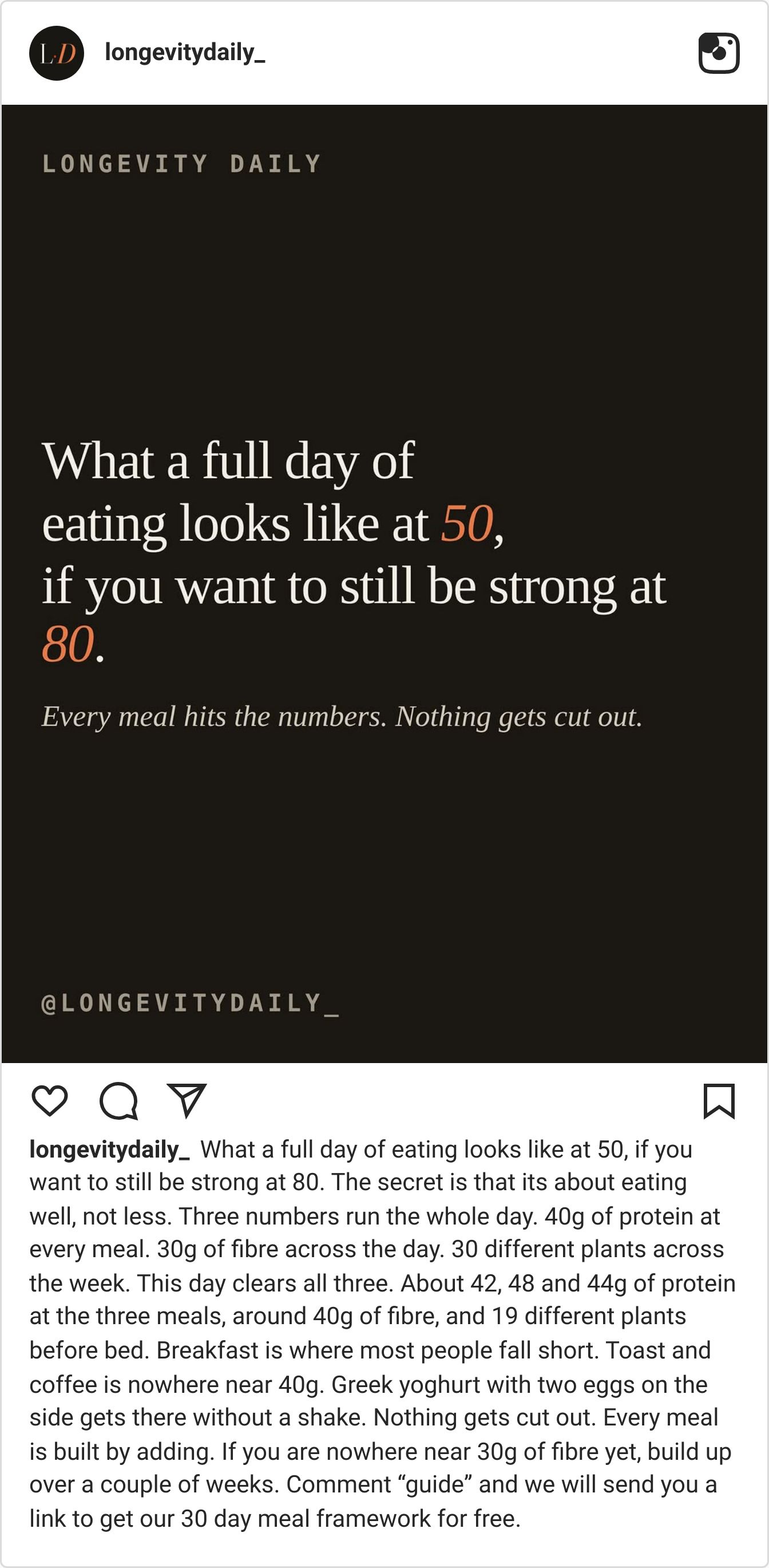
What a full day of eating looks like
Saved more than 1,100 times this weekend. Three numbers run the whole day: 40 g of protein at every meal, 30 g of fibre across the day and 30 different plants across the week. Nothing gets cut out.
MORE LONGEVITY NEWSLETTERS WORTH READING
Wednesday Preview
Tonight was about when the kitchen closes. Wednesday is about when it opens. We take on intermittent fasting, and whether the popular 16-hour fast is the right one.
Until Wednesday.
Longevity Daily / The Building Decades
P.S. Set it once and forget it. Add your kitchen close time to your calendar, then change the time to 3 hours before your bedtime.